


The right overhead crane is defined by what you lift, how often you lift it and the building you lift it in. Capacity, span, hook height and duty cycle narrow the choice quickly, before price ever enters the conversation.
The short answer
Choose a single girder crane for light to medium duty, lower building loads and lower cost. Choose a double girder crane for heavy loads, long spans, intensive duty and maximum hook height. Under 10–16 t with no headroom pressure, a single girder crane is usually the smart choice.
| Factor | Single girder | Double girder |
|---|---|---|
| Load path | Hoist runs on the lower flange of one beam | Crab runs on top of two beams |
| Hook height | Lower for the same building | Highest available |
| Crane weight and building loads | Lighter | Heavier |
| Duty | Light to medium | Up to intensive, continuous use |
| Access | Limited | Room for walkways and auxiliary hoists |
| Cost | Usually lower | Usually higher, but pays back on heavy use |
Single girder overhead cranes
For facilities requiring highly efficient, cost-effective lifting, a single girder crane provides the ideal balance of agility and strength. Its streamlined, lightweight design maximises vertical clearance and reduces the structural load on building supports.
- Ideal for light to medium-duty applications
- Swift installation and low maintenance requirements
- Versatile for everyday material handling
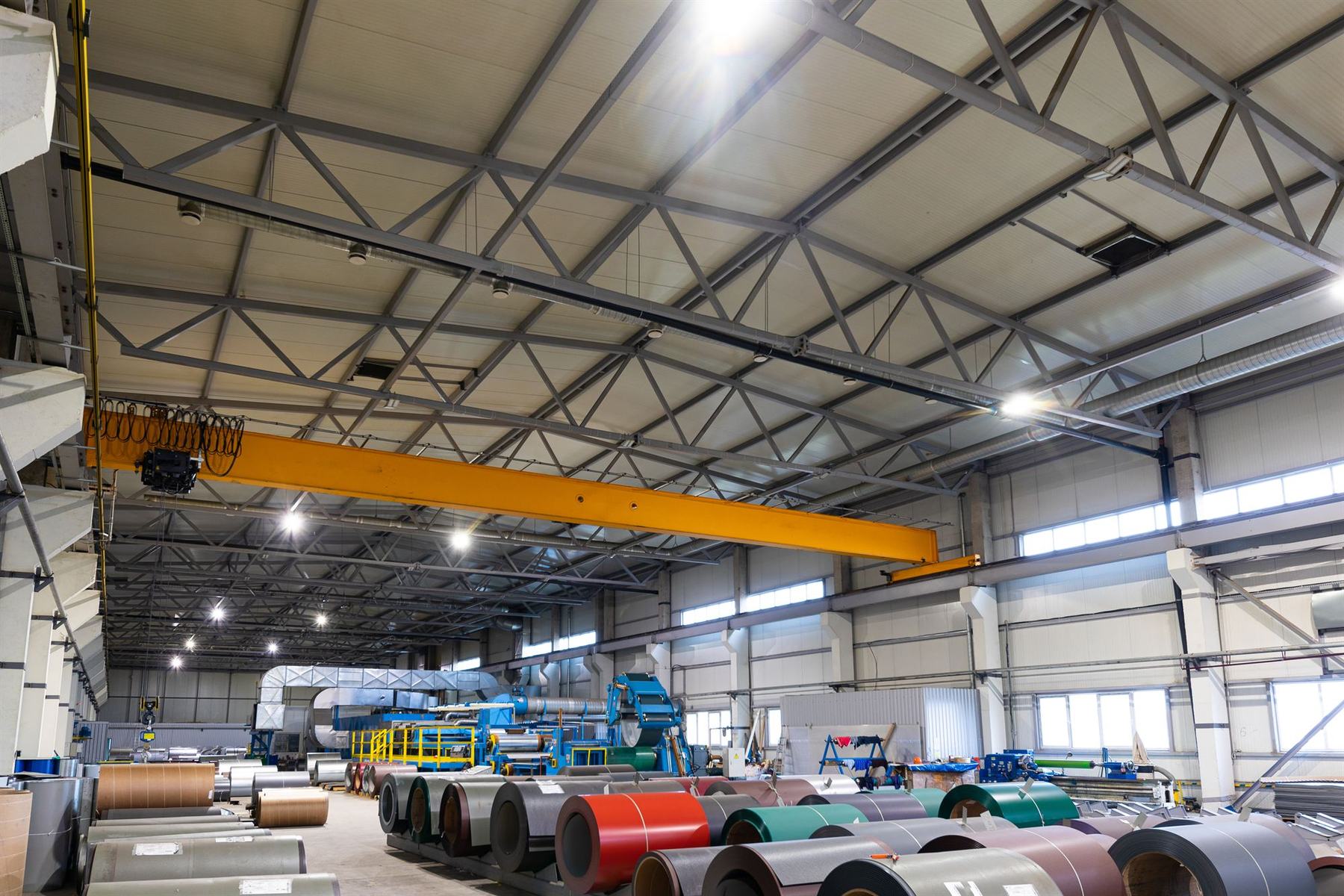
Double girder overhead cranes
Two girders carry a top-running crab, so the hook sits higher between them. Double girder cranes handle heavier loads, longer spans and more intensive duty cycles, and leave room for walkways, maintenance platforms and auxiliary hoists.
When the extra girder pays back
For heavy, frequent or high lifts, a double girder crane pays back through capacity, hook height and service life.
Four questions that usually decide it
- How much hook height do you lose? Measure from the floor to the lowest roof obstruction, then compare both designs.
- Can the building carry it? A heavier crane raises the wheel loads on the runway and columns.
- How hard will it work? Check the duty class, not just the capacity.
- Will you need access or a second hoist? Walkways and auxiliary hoists point towards two girders.
Not sure which fits? Our engineers calculate both options for your hall, free of charge, as part of the quotation.


