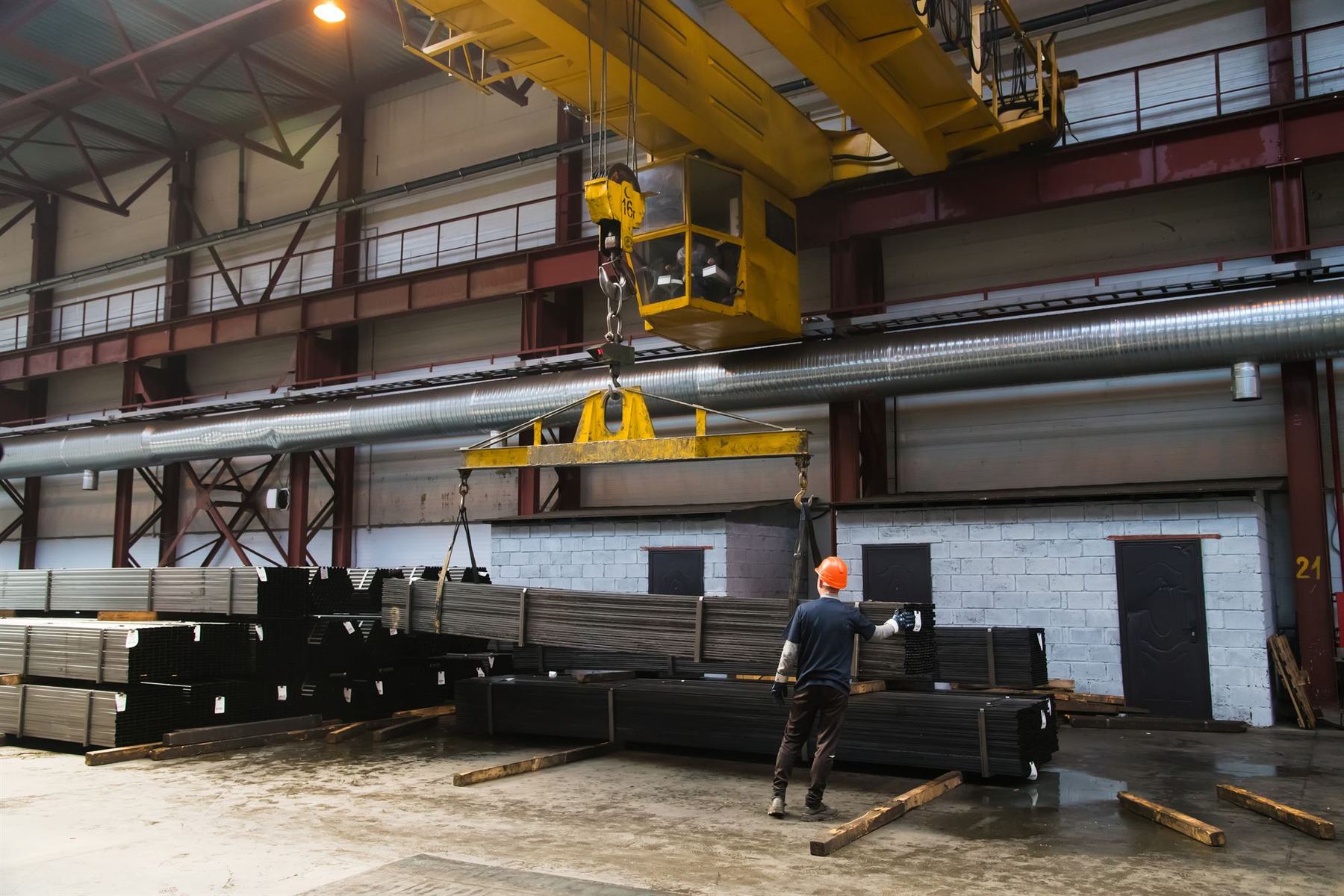
Two cranes with the same capacity can have very different lives. Duty classes describe how hard a mechanism works, so it can be designed to last. Getting the class wrong is one of the most common causes of early wear.
What a duty class measures
A duty class combines two things:
- Load spectrum: how close to full capacity the mechanism usually works.
- Operating time: how many hours the mechanism actually runs over its life, based on daily running time.
A hoist lifting near full load for many hours needs a higher class than one that lifts light loads occasionally.
FEM and ISO classes compared
FEM 9.511 and ISO 4301 use different labels for closely related mechanism groups. They are commonly compared as follows:
| ISO 4301 | FEM 9.511 | General meaning |
|---|---|---|
| M1 | 1Dm | Very light, infrequent use |
| M2 | 1Cm | Light, infrequent use |
| M3 | 1Bm | Light use |
| M4 | 1Am | Light to medium use |
| M5 | 2m | Medium use |
| M6 | 3m | Heavy use |
| M7 | 4m | Very heavy use |
| M8 | 5m | Severe, continuous use |
The mapping is a useful guide, but the standards define their parameters in detail. Always confirm against the standard and the manufacturer's calculation for a specific project.
How to work out your class
- Estimate the average number of lifts per hour.
- Estimate the average lift distance and hoisting speed, then the daily running time.
- Describe your load spectrum: mostly light, mixed, or mostly near capacity.
- Combine them in the classification tables to find the required class.
What happens if the class is wrong
Under-specifying leads to premature wear of gears, bearings, ropes and brakes, and more downtime. Over-specifying costs more than necessary. That is why EOTEC agrees the duty during the site survey, before calculating the crane.
EOTEC overhead cranes and hoisting units are available from FEM 1Am to 4m (ISO M4 to M7). See EOT cranes for the full range.