 01
Column-Mounted Jib Crane
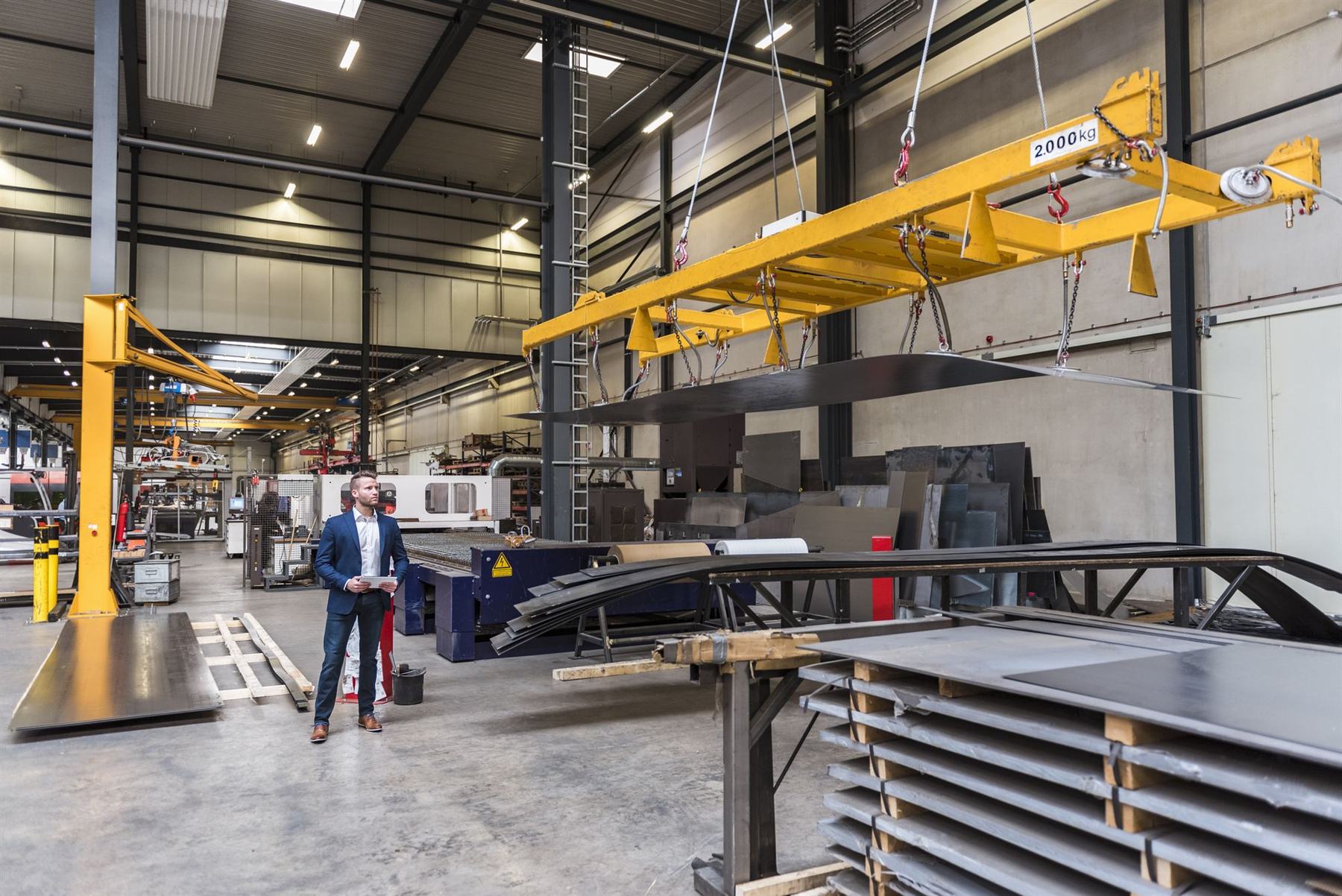
Free-standing pillar jibs with up to 360° slewing, anchored on a foundation or base plate.
 English
 Türkçe
 Français
 Русский
 Italiano
 العربية

Column-mounted & wall-mounted jib cranes with manual or motorised rotation, designed for flexible material handling.
Jib cranes deliver fast, local lifting right at the machine, workstation or loading bay, without tying up the main overhead crane.
Request a quote 01
Free-standing pillar jibs with up to 360° slewing, anchored on a foundation or base plate.
02
Fixed to a building column or wall, saving floor space with up to 180° slewing.
| Capacity | Up to 10 t |
|---|---|
| Slewing | Manual or motorised, 180° – 360° |
| Hoist | Electric chain or wire rope hoist |
Overload protection, limit switches and emergency stops designed in from the start.
Components chosen for continuous operation and long service life.
Precise load positioning with smooth, inverter-controlled drives.
Inspections, maintenance and modernization for the crane's whole life.
A jib crane has a horizontal arm that rotates around a column or wall bracket, with a hoist travelling along the arm. It delivers fast, local lifting right at the machine, workstation or loading bay, without tying up the main overhead crane.
A column-mounted jib stands free and offers up to 360° slewing, but needs a foundation or base plate. A wall-mounted jib fixes to a building column or wall, saves floor space and offers up to 180° slewing, provided the structure can carry the load.
Most use an electric chain hoist, while a wire rope hoist can suit higher capacities or heavier duty. Compare them in our hoist guide.
Manual slewing suits lighter loads and shorter reaches. Motorised slewing helps with heavier loads, longer arms and more frequent lifting.
EOTEC jib cranes are available up to 10 t.
Column-mounted jibs offer up to 360° and wall-mounted jibs up to 180°.
It is anchored on a foundation or base plate, sized for the crane and the floor conditions.
Measure from the column or wall to the farthest point the hook must serve, then check that the arc covers your machines and set-down points. Keep the reach no longer than you need, because a longer arm increases the bending load on the column, wall or foundation and makes manual slewing harder. Include this dimension in your enquiry.
No. The column or wall must be able to carry the load, and a jib applies a strong bending effect at its brackets as well as the weight itself. A light column may not be suitable, so have the structure checked before you decide. If it cannot take the load, a column-mounted jib on its own foundation avoids the problem.
Motorised slewing helps with heavier loads, longer arms and more frequent lifting, where pushing the load by hand becomes tiring or hard to control. Manual slewing suits lighter loads and shorter reaches, and it keeps the crane simpler. Tell us the load, the reach and how many lifts you make per hour, and the choice usually becomes clear.
Most jib cranes use an electric chain hoist, which is compact, light and suited to shorter lifts. A wire rope hoist can suit higher capacities or heavier duty, as our hoist guide explains. Decide by load and number of lifts, and remember that the hoist's own weight also acts on the arm and its support.
Yes, and this is a common arrangement, because the jib handles local lifts without tying up the main crane. The top of the jib must stay below the lowest point of the overhead crane and its load path, so the two cannot collide. Measure the clear height under the bridge before settling the height of the jib.
Not always. The crane can offer up to 360° of slewing, but walls, machines, racking and building columns near the arm limit what can be used in practice. Where the arm could swing into an obstruction, the slewing range should be restricted by design. Mark obstructions on your layout so that position and range can be agreed before fabrication.
We need the load including any attachment, the reach, the hook height required and the slewing range. Tell us whether the crane will stand on the floor or fix to a wall or column, what you know about that floor or structure, and how often it will lift. A free site survey can establish what you cannot measure.