


Electric Chain Hoists
Light, versatile hoists for jib cranes, monorails and workstation systems, with slip-clutch overload protection.
Where electric chain hoists work best
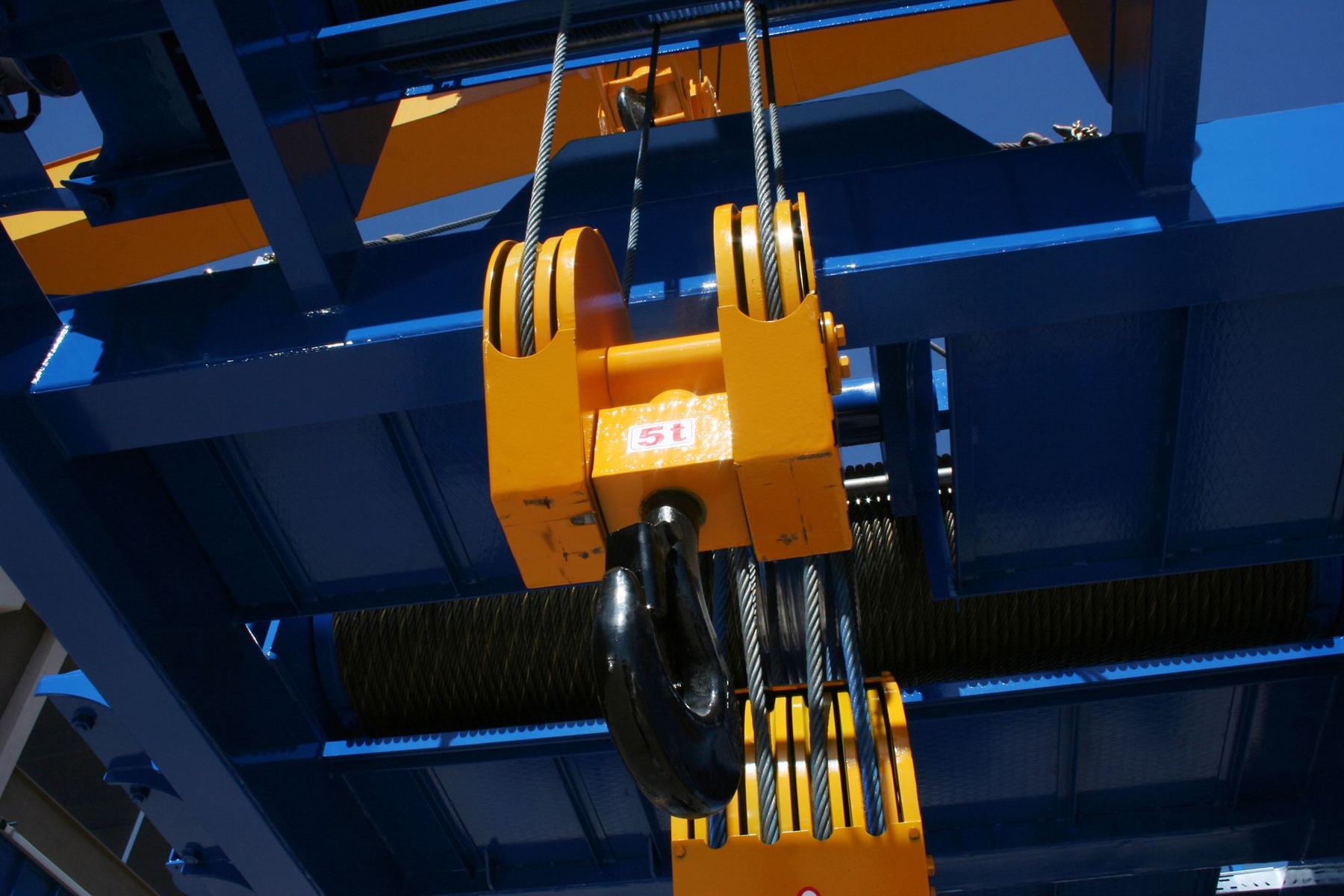
An electric chain hoist lifts with a load chain over a pocketed wheel. It is compact and light, which makes it a natural fit for lower capacities and shorter lifts, especially at the workstation.
- Jib cranes serving a machine, workstation or loading bay.
- Monorails and light crane systems.
- Light single girder overhead cranes.
- Assembly lines with frequent, short lifts.
Chain hoist or wire rope hoist?
| Factor | Electric chain hoist | Wire rope hoist |
|---|---|---|
| Capacity | Lower capacities | Higher capacities, up to heavy-duty |
| Lifting height | Shorter lifts | Greater lifting heights |
| Size and weight | Compact and light | Larger, heavier |
| Typical crane | Jib, monorail, light single girder | Single and double girder, gantry |
Read the full comparison in Wire Rope or Chain Hoist? A Practical Guide.
Control and overload protection
Slip-clutch overload protection helps prevent lifting beyond rated capacity. Two-speed or stepless inverter control makes it easier to position loads precisely, which matters most in assembly work.
Supply and service
Chain hoists can be supplied standalone or as part of a complete crane. EOTEC also inspects, maintains and repairs hoists of most makes. Talk to our engineers about your application.
Related


What protects a chain hoist from overload?
EOTEC electric chain hoists use slip-clutch overload protection.
Can a chain hoist be fitted to a jib crane?
Yes. Jib cranes commonly use an electric chain hoist, and a wire rope hoist can be used where the application requires it.
Does a slip clutch mean a chain hoist can never be overloaded?
No. The slip clutch helps prevent lifting beyond rated capacity, but it is a safeguard rather than a way of finding out what a load weighs. Operators still need to know the load before lifting. Letting the clutch slip repeatedly wears it, which can change how it behaves, so the clutch is one of the items to check at every regular inspection along with the chain and hook.
When is an electric chain hoist the wrong choice?
An electric chain hoist is the wrong choice when loads are heavy, lifts are long or the crane works hard through the shift. A chain hoist is built for lower capacities and shorter lifts, so those conditions point to a wire rope hoist instead. Its lower weight and compact size only pay off where the load and lifting height stay within its range.
Is an electric chain hoist suitable for an assembly line with frequent short lifts?
Yes, frequent short lifts are one of its typical uses, provided the hoist is classified for how often it actually runs. Count the lifts per hour and the usual load before choosing, because high frequency can raise the required duty class even at low weights. Two-speed or stepless inverter control makes precise placing easier, and stepless control suits delicate assembly work best.
How do I know when a chain hoist's load chain is worn out?
Treat the chain as worn when inspection shows stretching, thinning at the link contact points, cracks, twisted links or heavy corrosion, measured against the hoist manufacturer's limits. A stretched chain also stops seating correctly in the pocketed wheel, so jerky running or noise is a warning sign. Replace it with the chain specified for that hoist and check the wheel and hook at the same time.
What do I need to specify for an electric chain hoist on a monorail?
Tell us the load, the lifting height, how often it lifts, the beam section the hoist will run on and whether the route has curves. The beam decides which trolley fits, and the frequency decides the duty. Also say how precisely loads must be placed, because that settles two-speed or stepless control. If the monorail is not built yet, the route and the load are enough to start.
Can EOTEC repair an electric chain hoist from another brand?
Yes. EOTEC inspects, maintains and repairs hoists of most makes, so the hoist does not have to be one of ours. Send the make, model, capacity and a description of the fault so we can judge the job. If parts for an older unit are no longer available, a new electric chain hoist can be supplied standalone as the replacement.
